Having an on-premise mail server has many benefits in the areas of security, control, compliance, customization, and cost. Today, we focus on the security benefits.
That control is more important than ever in 2026. Microsoft 365 remains the single biggest target in email security: Microsoft's own threat intelligence team tracked roughly 8.3 billion phishing threats in Q1 2026 alone, and attackers have shifted well past simple credential phishing. In May 2026, the FBI warned about a phishing-as-a-service platform called Kali365 that lets low-skill attackers steal Microsoft 365 OAuth tokens and bypass MFA entirely, using real Microsoft infrastructure to do it. A separate vulnerability chain disclosed this year, dubbed SearchLeak, showed researchers could pull emails, calendar details, and files out of Microsoft 365 Copilot with a single click on a link that pointed to an actual microsoft.com domain. And in February, Microsoft confirmed a bug that let Copilot read and summarize emails marked confidential, bypassing the data loss prevention labels meant to stop exactly that.
None of this means Microsoft is uniquely careless. It means that when your email platform is also a constantly evolving AI and identity ecosystem serving hundreds of millions of users, the attack surface grows even when you do everything right on your end. The following are key areas where choosing an on-premise email server over hosted email can lead to security benefits for your business.
Data Control
With an on-premise email server, you have complete control over your data since it is hosted within your organization's physical infrastructure. This control can provide peace of mind for organizations that handle sensitive or confidential information and want to maintain direct oversight of their data.
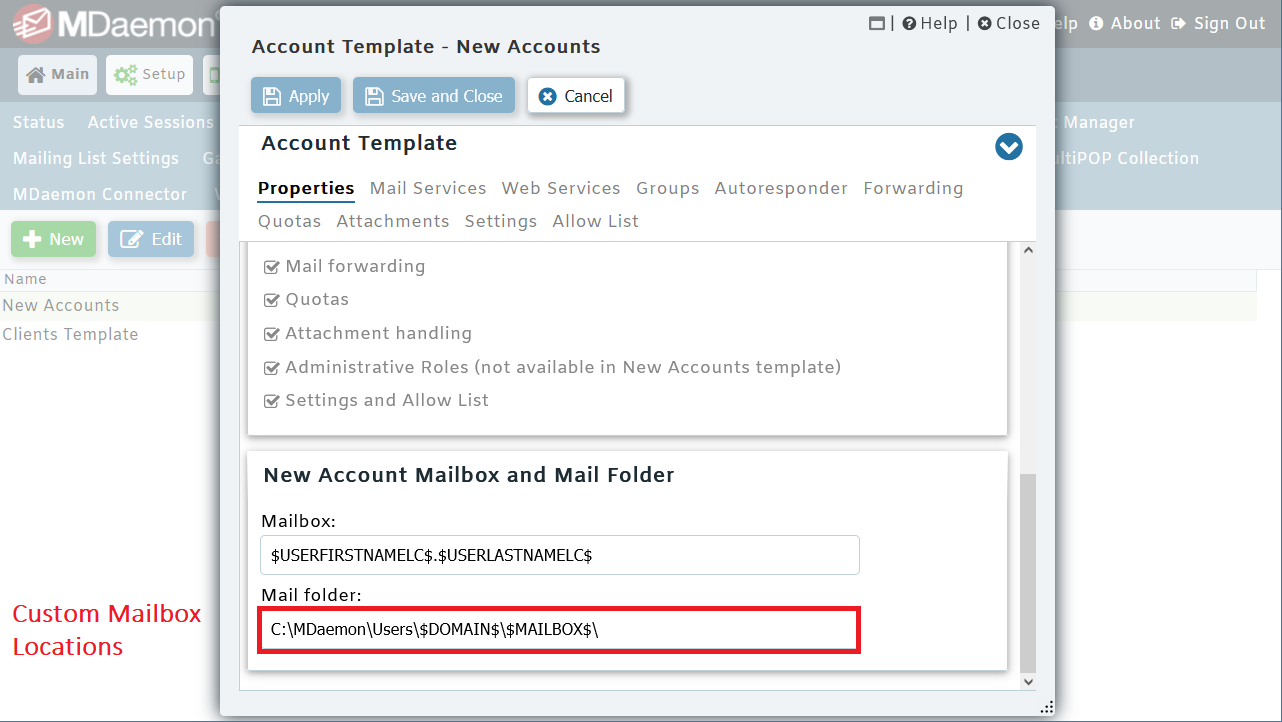
An on-premise MDaemon server, for example, allows administrators to control where certain types of data, such as mailbox locations, log files, and public folders, are stored. Administrators can also control PGP encryption settings, such as whether to decrypt encrypted messages or leave them in their encrypted state on the mail server.
There's a newer dimension to data control worth calling out: whether your email content is being indexed, summarized, or otherwise processed by AI. Cloud platforms increasingly route mailbox content through AI assistants like Copilot by default, and as the incidents above show, the guardrails around what that AI can see and do are still being worked out in production. With an on-premise server, that decision stays with you instead of being made upstream by your provider.
Physical Security & Reduced Attack Surface
On-premise email servers are typically housed in secure data centers or facilities owned and managed by the organization. This physical control can prevent unauthorized access and reduce the risk of physical tampering or theft. By keeping your email server within your organization's private network, you can reduce the potential attack surface as it is not exposed to the internet. This can help mitigate certain external threats.
Isolation from External Networks
By hosting the email server on-premise, you can create an isolated environment with limited external exposure. This setup reduces the attack surface and minimizes the risk of external threats gaining access to the server.
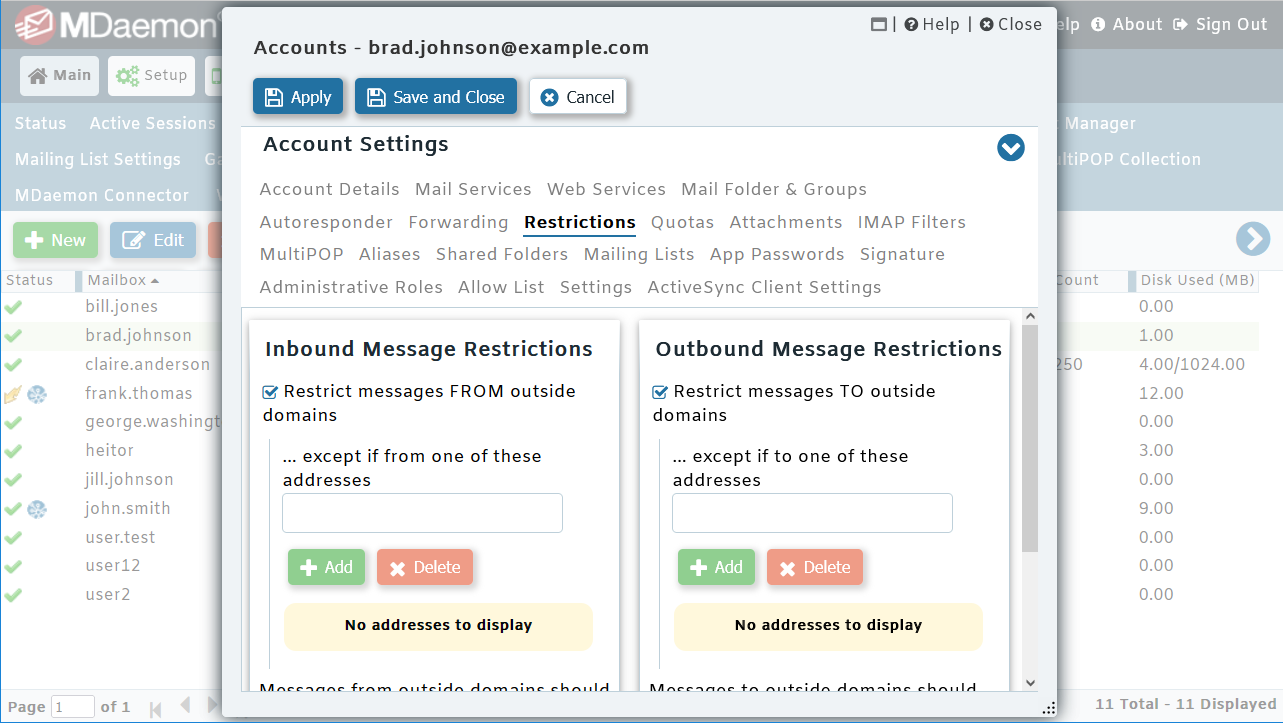
Some businesses prefer a local mail server that is limited to the local network and is therefore only used to send internal email. MDaemon is well suited for this type of environment, with controls to block communications to or from outside domains.
This kind of isolation also sidesteps an entire class of attack that's become more common in 2026: OAuth token theft. Campaigns like Kali365 don't need a password at all, just a user tricked into approving a malicious app or device code, which then hands the attacker a persistent token into the cloud tenant. An on-premise server isn't part of that identity ecosystem, so that attack path simply doesn't apply.
Compliance and Regulatory Requirements
Some organizations, especially those in highly regulated industries, may have specific compliance requirements that necessitate hosting data locally. By using an on-premise solution, they can better align with such regulations.
Data residency and processor relationships have only become more scrutinized since this article was first published. Every cloud provider you route mail through is a data processor under regulations like GDPR, which means a data processing agreement, ongoing due diligence, and a breach-notification dependency on that vendor's own incident response timeline. Hosting on-premise removes that processor relationship entirely: your organization is both controller and sole processor, with no third-party breach clock to worry about when a compliance deadline is on the line.
Custom Security Configurations
On-premise email servers offer greater flexibility in implementing custom security configurations tailored to the organization's unique needs. This level of customization can enhance security measures to suit specific threat landscapes.
For example, an on-premise MDaemon Email Server allows administrators to fully customize spam filter settings, including scoring settings and advanced SpamAssassin rules.
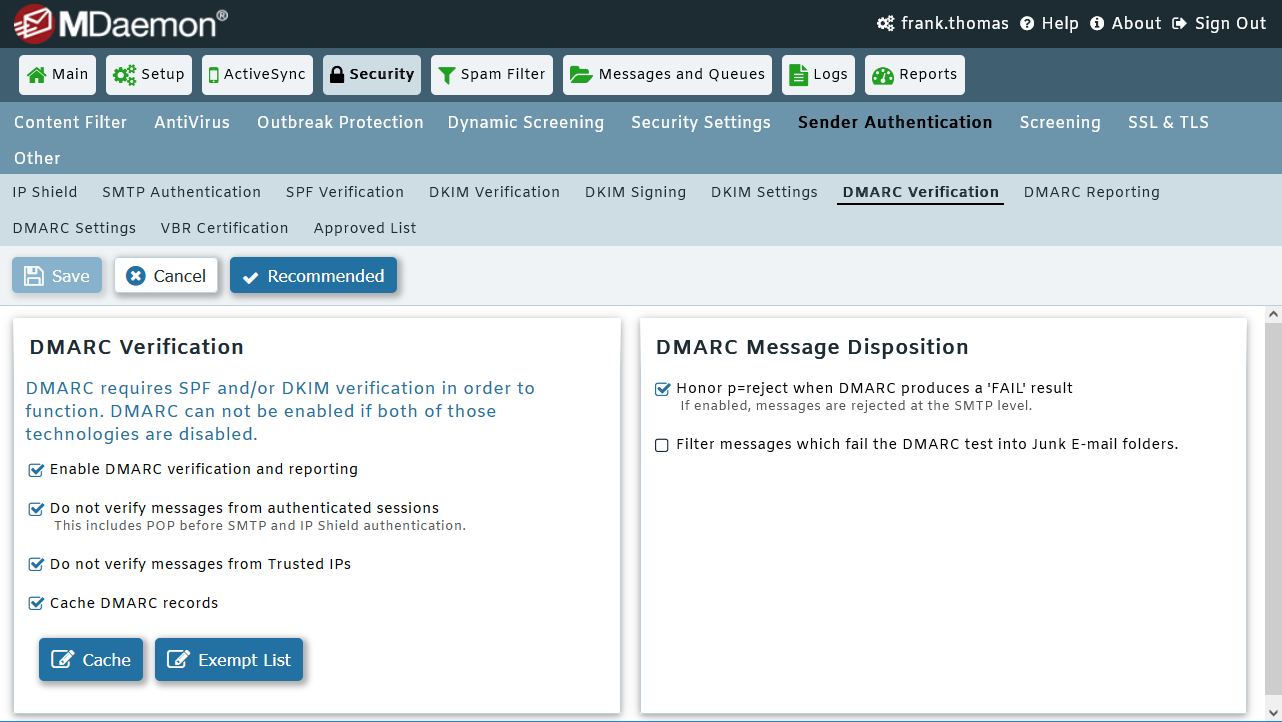
Administrators can also configure advanced content filtering rules, and customize email authentication, anti-abuse, and other security settings.
Reduced Dependency on Third-Party Providers
Using an on-premise email server means reduced dependency on third-party providers like Microsoft, which benefits businesses concerned about vendor lock-in or relying on external providers for their essential communication needs.
Also consider what happens when a shared platform has a security incident: you're waiting on the vendor's patch timeline, and when the flaw lives in a managed service like Copilot Enterprise, admins often can't do anything to mitigate it themselves in the meantime. That was the case with the SearchLeak vulnerability disclosed this year, where organizations had no configuration change available to reduce their exposure until Microsoft shipped a fix on its end. With an on-premise server, your security posture depends on your own patching and hardening decisions, not a queue you have no visibility into.
As Microsoft 365 and other cloud email solutions continue to be prime targets for hackers, businesses may find an on-premise email server such as MDaemon to be a more secure email and collaboration solution.
Personal Demo & Free Trial Available!
Want to learn more about MDaemon? Click here to schedule a personal demo, or click here to download your free trial!