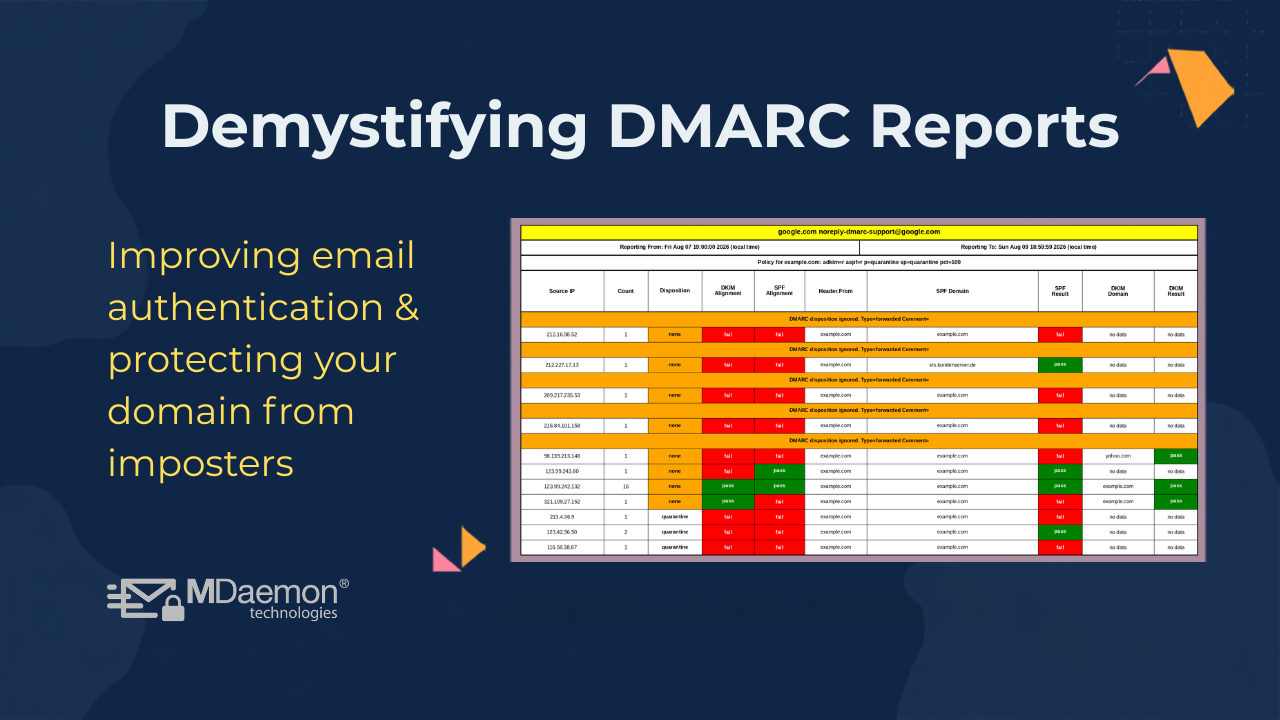
If you've added an email address to your DMARC record (in the RUA tag), you should now be receiving DMARC aggregate reports from every major mailbox provider that sees mail claiming to be from your domain (click here for a refresher on this topic). In this post, I’ll explain what's actually in those reports and how to use them to improve your domain's authentication.
This is Part 2 of a two-part series on email authentication. Part 1: Why Messages That Fail SPF, DKIM, or DMARC Still Reach Inboxes — and How to Fix It in MDaemon.